
Mouseatouille and DJ Set One Year On: Australia’s Answer to the Post-Brexit New Wave?
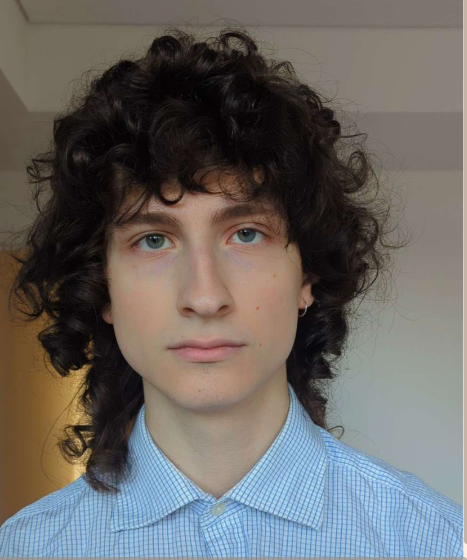

As the chosen opener for Cambridgeshire band Black Country, New Road on their Australian and Kiwi tour runs, the comparison between Naarm/Melbourne outfit Mouseatouille with BCNR is apparent. Both are large(r) baroque-rock bands, with emotional vocals delivered (usually) matter-of-factly over a cacophony of instruments not typically found in your average indie rock assemblage. What’s unique about this one then?
I was first introduced to the band through frontman Harry Green joining a Discord server I
moderated (I’m well aware). The server was a community made by, and around, the South Korean artist Asian Glow, a lo-fi slacker rocker whose fanbase served a fitting place to be introduced to the stripped-back music of Mouseatouille. Green advertised the band’s album Out of the Hospital and Into the Morgue to the server in around 2022, and I remember being surprised by its sheer quality despite flat-out obscurity. I added a few songs to my playlist. My few interactions with the singer were more than pleasant, and he seemed like a humble bloke. Needless to say, I was shocked to see the name plastered all over social media, hundreds of thousands of streams, and remixes from some of the best names in indie right now only a few years later.
During his short tenure on the server, Green mentioned that the band’s de-facto “mission
statement” was essentially to revitalise an interest in the Naarm music scene: “a lot of people in Melbourne make music to sort of emulate or pay tribute to the local scene. It'd be silly of me to say that the local scene is bad but it really isn't my thing. we started making music to like provide an alternative for our friends who also weren't really into the local scene. there are always so many of us involved that mouseatouille sometimes feels like a scene itself”.
This is certainly evident on the latest effort from the nine piece, DJ Set. Compared to
Morgue, the album is generally more focused and less conceptual, but without letting the music suffer in any way. Going down from a whopping twenty songs to a respectable eleven, the songs get a bit more room to breathe and develop. The album opens with ‘Tom’s Lament’. A mathy, open-tuned guitar plays a typical emo-styled arpeggiated riff that’s offset by a chipper clarinet refrain. As the song develops, more
and more instruments rally around this simple woodwind melody with their own responses, all kept instrumental and sweetly optimistic. It’s a quaint and reassuring way to start an album. By the end of the track, it all starts to get a little hectic, as synths swell and distort, and the band comes together for a big showtune finish.
Comparatively, the following track ‘Song for Growth’ is a bit sleepy. The simple double-tracked male/female vocals grow into a gang vocal sermon over a droning synth that starts to make you wonder if it’s really going anywhere. Just as you think that however, a sweet, folkish ballad begins to build. Its plucky, chip-tune synth akin to a music box gives the sense that you’re sitting beside a pixelated campfire, hearing the music of all-too-familiar friends. Mouseatouille also opening for emo singer-songwriter powerhouse
Your Arms are My Cocoon, part of the same fifth-wave emo scene as Asian Glow, makes a lot of sense here. The aforementioned cutesy lamellae melody is very reminiscent of
YAAMC tracks like 2020’s ‘metamorphosis’, but in a fresh context.
‘Mike & Melissa’ is a standard indie song affair, perhaps one of the most capital ‘I’ indie songs I’ve heard from the band. It proves their ability to write hits with ease; I doubt they’ve just learnt the secret, as they have consistently had a good ear for ear-snagging melodies. After two catchy verses, the song concludes with the same powerful, whole band matched hits that made the first track sound ‘showtunesque’. It shows off the advantages of having so much manpower and textural variety within a
rock band.
‘Harry and the Jets’, the first single to be released from the album, is the clear highlight of the entire forty four minutes. Simple, juvenile lyrics are rendered Sprechgesang-style over waltzing acoustic guitar chords in triple time. Pianos, arpeggiated electric guitars, and clarinets ornament occasionally, but this song is firm in not drifting off into the whims of any one instrument. While the lyrics sound like a quotidian teenage love affair (“She said she was into movies / so after weeks of debate / asked her out to
a cinema / just got my first date”), the song apparently doubles as \\The bridge of the song highlights Green’s voice, which has certainly improved since the days of Morgue, enough to sustain a song like this on its own. The BCNR comparison is most evident in this song, but not for no good reason – it’s catchy, emotionally pungent, and well written, and fit for even some of the biggest radio stations, despite its lo-fi recording.
‘Letters’ features the first bit of noisiness on the album so far: a refreshing change, but comes too far into a song that had already started to meander a little. Green’s vocals sound rather hoarse on this one, and I wish he had the support of the female vocal to help cut through the ooze of thick fuzzy guitar. The noise returns right from the jump on the album’s next highlight, ‘My Love’. Here, the male/female vocals work perfectly to float above the coarse shoegazing guitars. Clearly, the band owes a lot to Phil Elverum, as he is practically the master of this technique in the folky experimental sphere.
You can hear it all across Elverum’s career, as far back as the Microphones 25 years ago.
After two minutes, you might have believed ‘My Love’ was over. Instead, the song boards a spacecraft, as a modulated, tremolo effect takes over Green’s voice. These vocals over ‘verbed out organs remind me of 90s space-rock acts like Spiritualised, but this sudden transitional structure keeps it much more interesting than merely an homage. To me, this same outer stratosphere style can be heard quite explicitly on Morgue, but maybe that’s just down to the satellite imagery on the cover.
Sometimes I miss Morgue’s ambient noise experiments that have been omitted in lieu of a cleaner, poppier approach. They helped to sell the conceptual element of Morgue by contrasting bleak sounding noise with medical sounding bleeps that put the listener into a fugue-like state, whether that’s death, comatose, or indeed out in space. On the other hand, DJ Set’s answer to these is more jammy and melodic, as seen on ‘…And They Played Forever’: two minutes forty six of loud, beautiful noise pop.
So, are they Australia’s answer to post-Brexit new wave acts like Black Country, New Road? I disagree. Perhaps what Dom Lepore wrote for Post Trash is more accurate, that Mouseatouille is the Australian Broken Social Scene – hopefully with less messy interpersonal relationships, but with as many years, albums and accolades down the line.
Mouseatouille will be headlining in Melbourne this Saturday the 26th, and in Sydney at Paramatta Lanes Festival on Wednesday the 21st of October.


Comments