
One Woman, One Word, One City: The Fashion of Shoreditch's Nightlife

Updated: Sep 10

Style gives us meaning. I asked Shoreditch’s patron saints of partying, drunk20-something-year-old women, to describe their style in one word. Micro-trendor self-expression?
Trend categories have always existed and continue to shape prevailing trends. I’ll give a brief history lesson: The 1960s-1970s saw a youthful, bohemian rebellion in clothing, a response to post-war optimism. The launch of MTV meant music was now a visual medium, so the eccentric children of the 80s loved colour. Exhausted with this maximalism, the stripped-down, minimalist grunge of the 1990s coincided with global economic recession. Flashy displays of material wealth felt tone-deaf… No wonder Y2K saw this dream of a technological future with a chrome-coloured hue. The key takeaway here is organicism.
“Micro-trends”: “A short-lived style, aesthetic, or consumer habit that surges in popularity – often via social media – before fading away just as quickly” Merriam-Webster, 2026.
My favourite part of my working commute to London is the morning train journey. I relish staring out the window and at the people around me, silently exploring what clothing is really being worn. Provoking this piece, I looked around the train and noticed the significant erasure of digital aesthetics inday-to-day clothing. So… the coming weekend, I ventured to the eclectic, East London hot spot: Shoreditch. The City’s modern creative capital, Shoreditch, has cemented its status as a vibrant hub for artists, nightlife, or anyone combusting with originality. Shoreditch saw its innovative boom in the 1990s, when street artists like Damien Hirst and later Banksy began transforming empty walls into open-air canvases. Rainbow pigment paint reflected a shift toward sociological radicalism.
I wanted to investigate what women are wearing in real life, not on screens.
Have micro-trends turned personal style into a personally-burnt-outtotalitarian uniform?
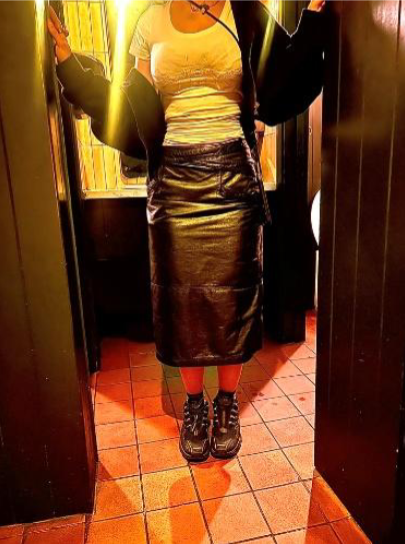
Woman One: “Gothy?”, she expressed with a tone of embarrassment. I was idly stalking the bathroom, watching flurries of loquacious, lonely or loving women. Two black boots tread into the sticky,
orange-lit room, and my eyes salivated. Introducing myself with my glossier lipstick turned microphone, I immediately felt too ordinary for my project. The person standing in front of me oozed authenticity.
Woman One wore a leather-look skirt at a length typically run away from at clubs. No mini, but calf-skimming handbook of female body flattery. Mustering my pride, I explained my ‘research’. Two bathroom-worshipping women, we chatted.
I found out she was a fashion student, with dreams of working in the industry. I questioned the rhetoric behind her word, “Gothy?”. Explaining that her personal style was something she’s proud of, she felt anxious to publicly take pride in this. I know my style for myself, and I know my style is great, but expressing this feels odd because of social expectations. Micro-trends are a particularly female phenomenon. Woman One spoke about her passion with modesty. There wasn't anything really “Gothy” about her, as she later conceded, but her outfit was felttoo-far outside the status quo of micro-trends to see it as something even potentially cool to someone outside of her close circle.
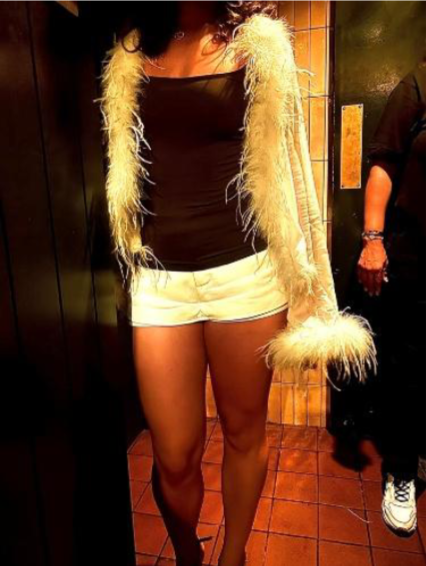
Woman Two: “Girly”, she said, more confident than my last interviewee, yet still with an unsure aroma. Forme, this woman was fabulous! Carrying herself with confidence and bravely daring Shoreditch’s cobbled streets with strappy heels, this was fierce. Explaining her reply, this was a night out with her girls. Her pack of women who made her feel like the embodiment of all things “girly”. My analysis began to take a different angle. If style is all about feeling, then who am I to judge a micro-trend? Sure, “girl” isn’t necessarily a current viral category, but girlishness has become a ceiling for the trend cycle.
Micro-trends are affecting the way women view themselves, dumbing down their personal style to fit colloquial labels. Everything is trending all at once, so nothing is really trending at all. Phones lack a disconcerting edge – the consumer habits affect the inside perhaps more than the out.
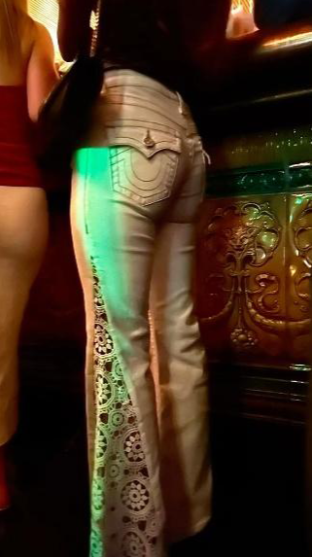
Woman Three: “Coachella”, expressed in an upbeat song. My eyes clocked her True Religion jeans; I was in love. We bonded over our serious relationship with the brand.
Jeans that make you feel your best and look your best. This American tourist knew she looked incredible. There is something wonderful about a woman with self-confidence. She wore her favourite Chanel bag with her favourite go-to outfit. We all have that one ‘look’ that never fails us. I recall April and seeing my TikTok feed regurgitate clips of the gentrified desert turning its bohemian roots into questionable fashion performativity.
I had a sour take on this year’s Coachella, thinking it had become too much about brands, garishness, and going to Coachella, rather than enjoying the festival.
Coachella, arguably like Shoreditch, was once a space for subcultural individuality, yet now risks becoming a hyper-accelerated breeding-ground for our monthly trend-cycle. Driven by fast fashion, these True Religion jeans opposingly refrain from pumping out thousands of cheap garments weekly, like Zara or Shein.
I tasted a lump of frustration with Woman Three’s word choice… This was not Coachella! This was a striking expression of confidence. She stood out, wearing an outfit that seemed to repel the essence of the micro-trend. Sure, it had a Western flair, but digital algorithms have splintered personal perception into choosing from a few niche labels.
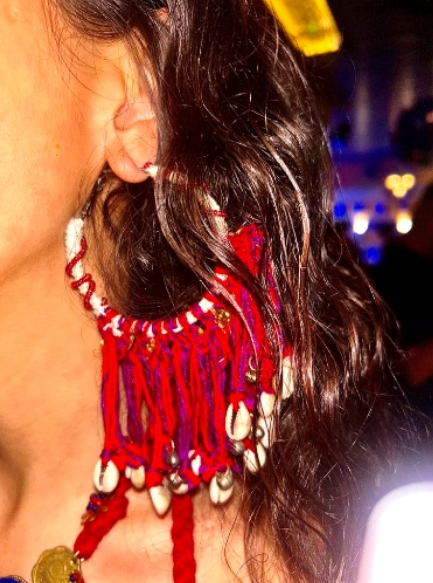
Woman Four: “Original”, and I let out a satisfied smile. The night’s silent quest to hear a single word was met, and I was gifted with more than I expected. A statement artist, Woman Four explained her draw to bold colour – she loved experimenting with light.
I hit the jackpot.
Culture and emotion went into this accessory, a perfect symbol of self-expression. Online pressure to submit to aesthetics suddenly became barricaded inside an online world. These earrings existed outside of TikTok, outside of really much anything I had seen in the club toilet before.
I’ve linked her Instagram handle here: @Elenipavli.art – a talented woman telling eye-opening stories through her artwork.
So, what did I discover? Micro-trends aren’t going anywhere, but perhaps we already knew that. What became more revealing was the way overconsumption capitalises on social media’s ability to prey on female insecurities. These women appeared less driven to purchase these items rather than to negotiate their own perceptions of self to online categories.
Ultimately, categorisation became my real story. When asking the women to articulate their personal style, confidence sometimes turned into fluster. I found that attempting to explain the strange space style occupies within the public sphere is increasingly confusing. The micro-trend era of the 2020s offers the consumer a seemingly convenient antidote to a desire for connection; an e-commerce mirage in which constant consumption masquerades as self-expression.
Women are burdened by the persistent pressure to conform to the label of the month. Yet, in “real” life, these trends do not materialise on the street with quite the same intensity that social media would have us believe. The women of Shoreditch dress for themselves. It is social media that refuses to grant this authentic vernacular permission to enter the algorithm.
I want pride. I want style to be unapologetic. A black tank does not mean you’re “basic”. Wearing lace doesn’t make you “boho”. Black clothes don’t mean that you’re “gunge”.
Trends encourage women to reproduce patriarchal self-labelling that has long shaped fashion, mirroring our socio-economic climates. It’s no coincidence that fashion media uses this new compound word to exert control over women at a rapid, unattainable rate. Rising housing prices, shrinking funding opportunities, and the growing sense of youth disconnection become, in turn,micro-trends: the aestheticisation of exhausting desire.


Comments